










The Melbourne Branch Mint
The Melbourne mint was the second Australian branch of the Royal Mint to be established. The colony of Victoria had petitioned the Imperial government for a mint in the wake of the Australian Gold Rush, but Sydney's application was approved first. Melbourne's petition was renewed and approved in 1869.
The mint was constructed at what is now the corner of William and La Trobe Streets in Melbourne's city centre. The mint was officially opened on 12 June 1872, and on the same day, the first two Melbourne mint Sovereigns were struck by the then Governor of Victoria, John Manners-Sutton, 3rd Viscount Canterbury.
Initially, the Melbourne mint was staffed by Brits, including the Deputy Master Colonel (later Major General) Edward Wolstenholme Ward who had previously been employed in the same role at the Sydney mint. Francis Bowyer Miller became the first clerk of the Bullion Office, bringing his patented method for purifying gold to Melbourne. Dies were engraved at the London mint and shipped to Australia.
The Melbourne mint primarily struck gold coins until 1916, when the first silver coins of a new Commonwealth currency were issued, with bronze coins issued from 1919. Coins continued to be struck at Melbourne, though, until Australia decimalised its currency in 1964. Following the opening of the Royal Australian Mint in Canberra in 1965, the Melbourne mint's operations were wound down, part of the site demolished, and the machinery sold.
Today, the mint's old administrative building houses Melbourne's Hellenic Museum and is one of the few surviving examples of Renaissance Revival architecture in Australia.
Melbourne Mint Gold Sovereigns
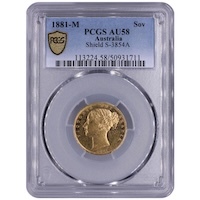
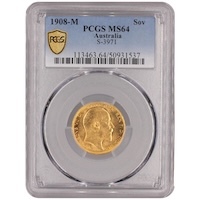
In the 1870s and early 1880s, gold Sovereigns were struck at the Melbourne mint with the Young Head portrait of Queen Victoria. Designed by William Wyon, this bust had been used on London mint Sovereigns since the start of Victoria's reign.
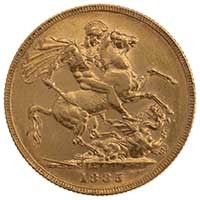
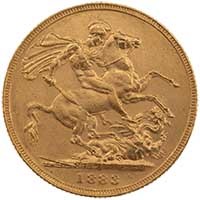
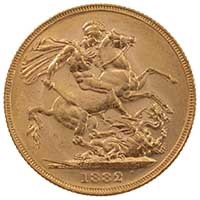
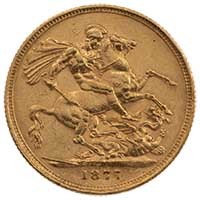
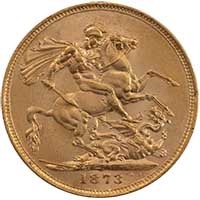
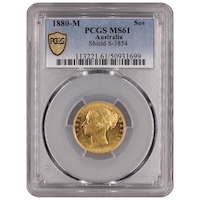
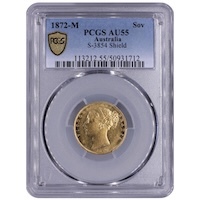
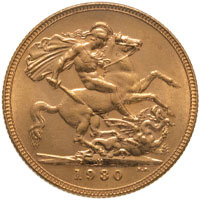
Initially, two different reverse designs were used concurrently on Melbourne Sovereigns, with both designs struck in some years. Early Melbourne mint Sovereigns with Benedetto Pistrucci's Saint George and the dragon design are more common. On these gold coins, the 'M' mintmark appears on the obverse, below the portrait of Victoria. Melbourne Sovereigns with a shield reverse are generally scarcer and were not issued at all between 1875 and 1879. Designed by Jean Baptiste Merlen, this reverse was adapted for use at the Melbourne mint by adding a tiny 'M' mintmark at the base of the laurel wreath.
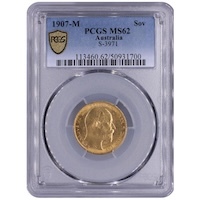
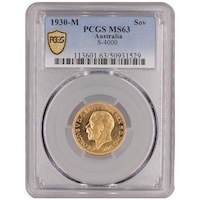
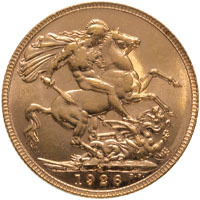
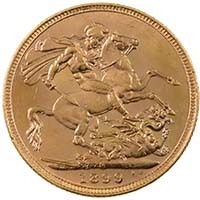
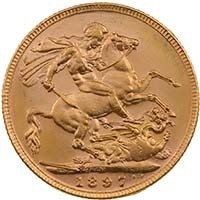
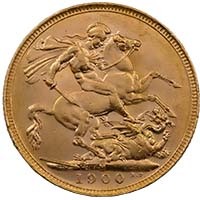
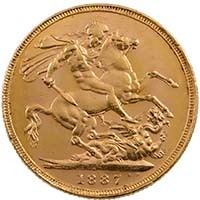
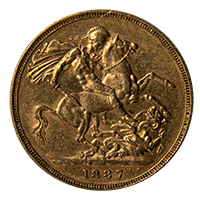
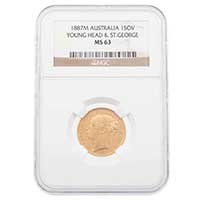
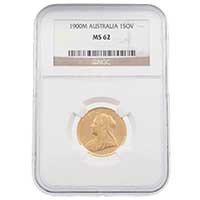
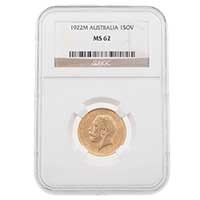
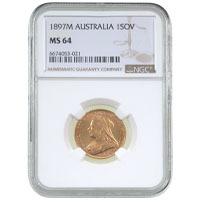
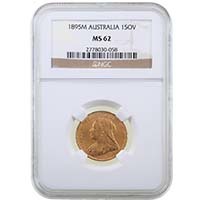
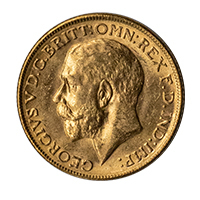
In 1887, the shield design was discarded with the St George design becoming the sole reverse in use on Melbourne mint Sovereigns, paired with an updated portrait of Queen Victoria. The mintmark was moved to the groundline below the dragon and above the date. This approach was maintained through the end of Queen Victoria's reign and into that of her successors, Edward VII and George V, who both struck Sovereigns at Melbourne with the image of Saint George on the reverse.
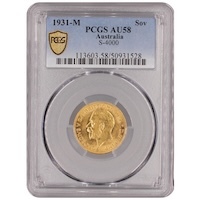
The final gold Sovereigns were struck in Melbourne in 1931, long after the London branch of the Royal Mint had ceased to issue these coins for circulation.
Collecting Melbourne Mint Sovereigns
Melbourne mint Sovereigns are a rewarding area of coin collecting.
It is a long series to collect, totalling more than sixty years of annual issues plus a range of scarcer varieties. The most challenging Melbourne Sovereigns to acquire may be from the early years of this mint's operation when two distinct reverse designs were utilised, and a wide number of die varieties are known, with some very scarce indeed. There are a number of later Melbourne issues that are notoriously difficult to acquire, including 1920-M, 1921-M, 1922-M, 1927-M and 1929-M, as well as all of the 'small head' George V coins issued in the years leading up to the final Sovereign issues from this branch mint.
